

Kũhocia Mwano
Written By Maina Wanderi
By Maina Wanderi
Maina Wanderi
January 2018

A Transformative Story
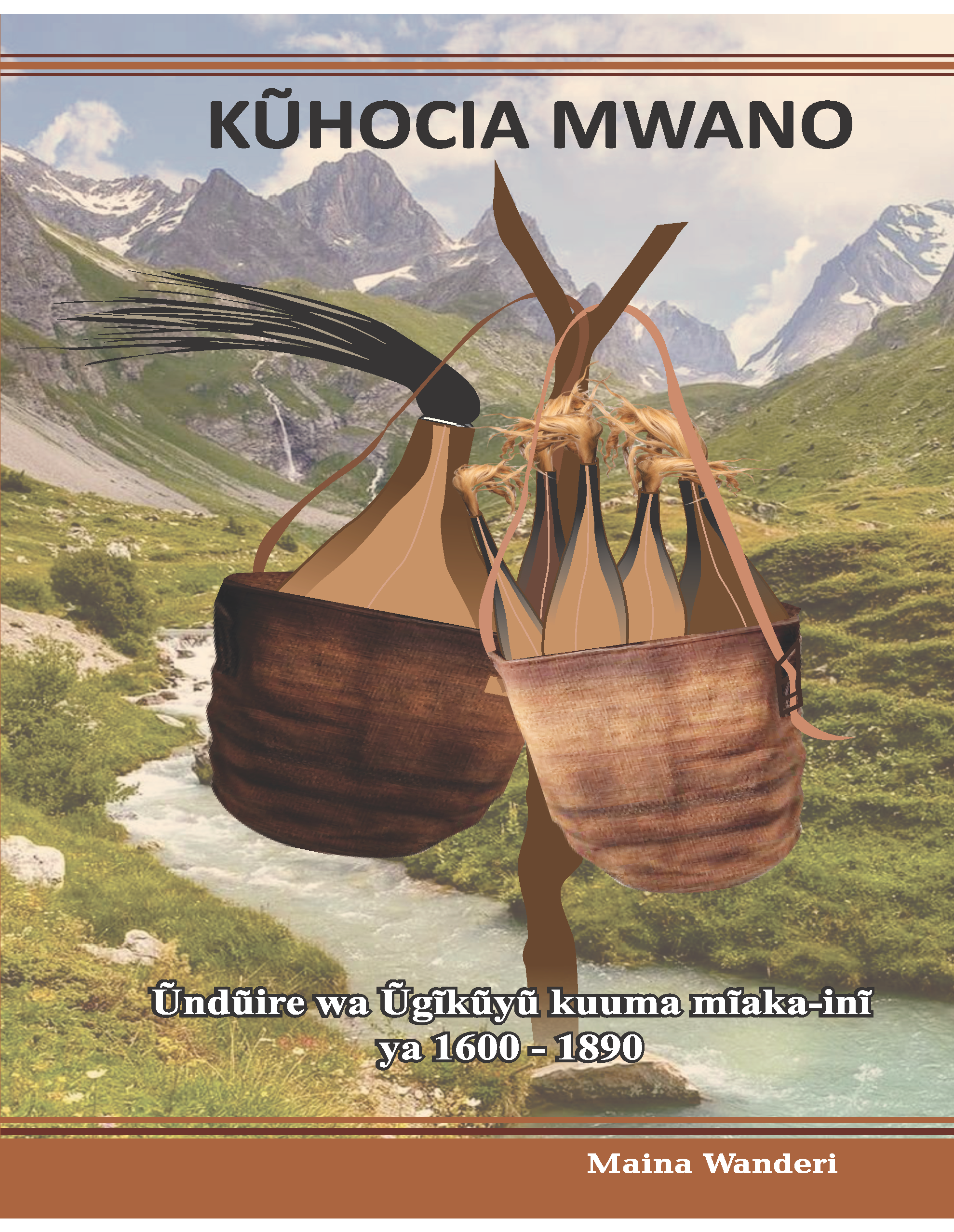
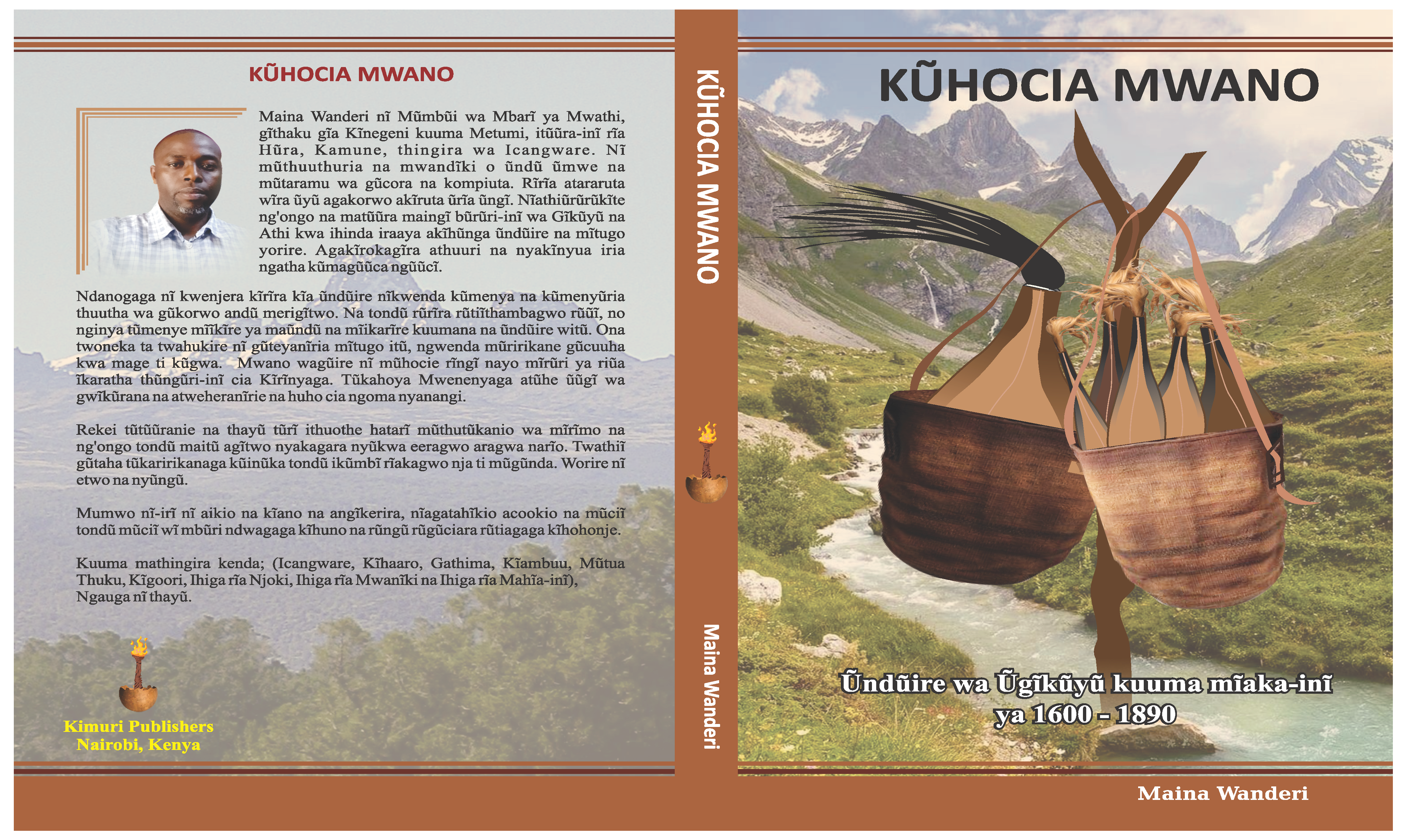
‘Kũhocia Mwano’ is a book written in the Kikuyu language of Bantus from Central Kenya. It comprehensively highlights their culture and traditions before the European colony was established within their motherland. The main theme of this book is to showcase who the traditional Agĩkũyũ were and how they used to carry on with their daily livelihoods.
The book ‘Kũhocia Mwano’ has tried to give a clear image of Gĩkũyũ origin under the topic “Kĩhumo gĩa Gĩkũyũ na Mũmbi.” The parents of Agĩkũyũ are the Gĩkũyũ and Mũmbi, whom we strongly believe were entirely created by God, called Mwenenyaga, Ngai, Mũrungu, Gĩthuku, or Kĩremanditi, among many. Upon settling at Metumi on the land that they inherited from Ngai, the couples were blessed with ten daughters. According to Gĩkũyũ beliefs, counting goats or children was taboo. That’s why his daughters were not mentioned as ten but as nine (Kenda Mũiyũru). Gĩkũyũ bore no boy. As they attained the age of getting married, he got worried about where to get men to marry his daughters. After a while, he remembered that there was time when Mwenenyaga gave him a promise: “If you need something beyond your reach, always go under the Mũgumo tree and offer me a sacrifice. I will provide you with your desired need.” Gĩkũyũ did the same, and Ngai blessed him with men to marry her daughters. The last born, called Wamũyũ or Warigia, did not get married, but she later gave birth out of wedlock.
Out of these Kenda Mũiyũru, Agĩkũyũ got the names of clans basically known as Mĩhĩrĩga Kenda, but literally they are ten. The first daughter was Wanjirũ, and she is the mother of Anjirũ. From second to last; Wanjikũ – Anjikũ, Wairimũ or Gathigia – Airimũ or Agathigia, Wangeci or Waithĩra – Angeci or Aitherandũ, Wambũi – Ambũi, Wangũi or Waithiegeni – Angũi or Aithiegeni, Njeri or Wanjeri or Wacera – Acera, Wangarĩ – Angarĩ or Aithekahuno, Nyambura or Wambura or Wakĩũrũ – Ambura or Ethaga and lastly, Wamũyũ or Warigia is the mother of Aicakamũyũ. They later multiplied to great numbers and relocated from Metumi (Mũrang’a) to Gaki (Nyeri) and later Kabete (Kiambu).
Even though there was no formal education, Agĩkũyũ knew how to count in terms of ten (makũmi), counting days, months and seasons. Inside this book, we get to know how each and every Mũhĩrĩga was counting from one to ten, the names of imera, days, and the names of their twelve months, mĩeri ya mwaka. They also knew how to perfectly estimate time, whether it was a rainy or sunny day, under the sub-topic Mathaa na Mahinda.
They were arable farmers, cultivating land (mũgũnda, ng’ũndũ, or gĩthaka) and rearing goats, mbũri. In ancient Gĩkũyũ land, there were no cattle or chickens. Around the 1590s, that’s when they interacted with Ndia and started raiding Maasai Land (Ũkabi), where they got cows. Ũkabi/Maitha were the original owners of many parts of Gaki (Nyeri). Their food, irio, was from mũgũnda, comprising ikwa, ndũma, mboco, mĩanga, ngwacĩ, marigũ, mũhĩa, mwere, togotia, mũhika na ihu, and kahũrũra, among others. Maize was not in their diet because it was introduced by the Portuguese in the 1620s. Also, meat was not on their menu, but they take it occasionally. Behind that, the goats, mbũri, which were raring, were primarily for offering sacrifices to Mwene Thĩ or sometimes their ancestors, ngoma.
Agĩkũyũ were staunch believers of Ngai, and they believed that He lived in Kĩrĩnyaga, but He also dwelt in the other 3 mountains. That’s why they used to pray facing Kĩrĩnyaga, Kĩa Mbirũirũ, Kĩa Njahĩ and Gĩa Thimbara. While praying, gũthathaiya Mwenenyaga or gũcũkũrithia Ngai, men were lifting their hands up, requesting blessings and women were to wait for them to be poured into their hands.
That’s why they keep on saying, thaai, thathaiya Ngai, thaai. To appease Kĩremanditi, they usually slaughter an offering goat under the Mũgumo tree or Kĩgongona-inĩ kĩa mũciĩ. Then, the altar, icua to roast sacrificial meat was made. Due to their purity before Mũrungu, He usually listens to them and blesses them abundantly.
The book ‘Kũhocia Mwano’ gives us a credible account of the birth of a child (gũciarwo kwa mwana), circumcision (irua), marriage (ũhiki), and death and interment (gũkua na gũteo kana gũthikwo). These were the four stages of life according to Agĩkũyũ and every stage was accompanied by its rites and sacrifices, which the book elaborates on widely. Those who were born as intermediaries between human beings and Ngai – mũũndũ mũgo, mũrathi, kĩoni, or mũthingi wa gĩthitũ were notified while still young. They were ordained as full members of the group ndundu ya ago while someone got married and the process was known as gũkunũra mũũndũ mũgo. Once these rites were over, he was given five gourds of medicine (mbũũthũ cia mĩthaiga) and diving pebbles (mbũgũ), which were carried inside the divining gourd (mwano). No woman in Gĩkũyũ land has mwano because they were not ordained as ago but remained as Arathi.
Upon circumcision, women got married at the age of 14, and men became the army of the
Agĩkũyũ territory (njaama ya ita). When the man marries, he ceases to be an active member of Njaama, but when need arises, he can be recalled to join the army. During that time, he was known as kamatimũ and his wife was kang’ei. As the days go by, he passes through all stages of manhood to become an elder, mũthuuri wa maturanguru. Kĩama kĩa maturanguru were the chief priests of Agĩkũyũ and their main duty was to perform the highly elevated sacrifices of the tribe or clan (magongoona ma mbarĩ kana ma mũhĩrĩga). These consist of sacrificing for rain (kũhoya Ngai mbura), during certain outbreaks like diseases or deaths (kũhĩtũkania mbũri), during famine, etc. Some of the famines ever recorded in Gĩkũyũ territory are: ng’aragu ya rũraaya (1900), ng’aragu ya Ndũiga wa Ngaara (1909), ng’aragu ya Gatheea (njimbi) (1911), ng’aragu ya Kĩmotho or ng’aragu ya Gĩthioro (1918), ng’aragu ya karũgia mũthuru (1934), ng’aragu ya Gacere (1938), ng’aragu ya kaibang’a, ng’aragu ya mĩanga (1943), ng’aragu ya gathirikari (1965) and ng’aragu ya thate (1994). Successfully, the elders sacrificed and prayed to Ngai and He responded by giving them plenty of harvests.
This age group of Kĩama kĩa Maturanguru comprises 9 elders (kĩama gĩa kenda) and were also the rulers of the agĩkũyũ (riika rĩa wathani). The 2 age sets of ruling class are Maina and Mwangi (riika rĩa Maina or Irũngũ and riika rĩa Mwangi or Mandũti). After ruling for 30-35 years, they were to hand over authority to the next generation, a process called ituĩka. Those receiving the tools of statesmanship were called atuĩki. If it is Mwangi who is in authority, he has to hand it over to Irũngũ or Maina Mũnini. So, Irũngũ are atuĩki a Mwangi.
Death was the last stage of life in Gĩkũyũ land. There were many causes of death, like diseases, famine, mauled by animals, murder, suicide and during childbirth, among others. Due to taboos that accompany death, it was a prohibition, mũgiro, to touch a dead body because doing so automatically brought abomination, thahu. If family members notice that somebody is about to die, they carry him or her and abandon him near where dead bodies were normally thrown (kĩbĩrĩra). Those elders who were rich were sometimes buried, but their corpses were not touched by any of his sons. It was taken to its burial place by his grandchildren or by those who were anti-abomination, irema thahu. They were later cleansed, gũtahĩkio by mũũndũ mũgo.
Discover More Works by Maina Wanderi


Wangeci Mũrũgi
Readers Choice
“This book is a cultural gem, shedding light on the deep-rooted traditions of the Agĩkũyũ. It’s an eye-opening read for anyone interested in the untold stories of Kenya’s past.”
“A profound exploration of Kikuyu heritage that immerses you in the authentic pre-colonial culture of the Agĩkũyũ. This book is a treasure trove of wisdom and tradition, beautifully narrated in the Kikuyu language.”
Wairimu Kĩhĩĩ
Review of Books
Kamau Njoroge
Readers Choice
“Kũhocia Mwano offers a rare glimpse into the daily lives and customs of the Kikuyu people before European colonization. It’s a powerful reminder of the resilience and richness of indigenous cultures.”